
A new report by Motilal Oswal Financial Services Ltd (MOFSL) indicates that inflation, interest rates, and monetary policy have become more significant drivers of gold prices than traditional geopolitical conflicts, with markets increasingly focusing on these economic factors.

'They talked bad about our leaders. They said India was a dead economy. They were not sensitive to the Indian psyche.'

Indian benchmark indices Sensex and Nifty closed lower in a volatile session due to profit-taking in banking and financial shares, despite earlier gains driven by easing geopolitical tensions. Analysts suggest investors remain cautious and are not aggressively chasing the recent rally.
Indian benchmark indices, Sensex and Nifty, saw early gains, primarily driven by IT stocks, amidst expectations of a less aggressive monetary policy from the US Federal Reserve following softer inflation data. Global market trends and upcoming Q1 results are also influencing investor sentiment. Track Sensex, Nifty on july 16.

'A deal will only be possible if India stops buying Russian oil -- but even then, New Delhi must not compromise its core red lines.'
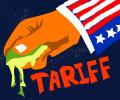
A trade deal makes sense only if it is fair and reciprocal. If the cost is strategic dependence or loss of policy space, waiting is the wiser option, asserts Ajay Srivastava.

Tata Motors Passenger Vehicles (TMPV) reported Q1FY27 results showing significant margin pressures at both Jaguar Land Rover (JLR) and its domestic operations, despite strong volume growth in the India business. Analysts expect these margin headwinds to persist, potentially offsetting gains from increased sales and new launches.

The US is expected to push for sweeping changes in India's policies, ranging from tariff reductions to regulatory overhauls, that could benefit American firms and exporters, under the proposed bilateral trade agreement with India, think tank GTRI said on Sunday.

A working paper by the Economic Advisory Council to the Prime Minister (EAC-PM) reveals a continuous decline in the rate at which foreign-owned firms invest in fixed assets in India since the FY20 peak, contrasting with a steady increase from Indian business groups.

The Indian rupee depreciated by 32 paise to close at 92.83 against the US dollar, influenced by escalating global tensions, particularly the US-Iran conflict, and the deadline for the RBI's instructions to banks to curb overnight positions.

Gold and silver are expected to remain volatile with a corrective bias as investors assess the latest flare-up in the US-Iran conflict, movements in crude oil prices, and inflation data, which could reshape expectations for global interest rates, according to analysts.

Equity benchmark indices Sensex and Nifty tumbled in early trade on Monday, with the 30-share BSE Sensex falling 1,613.09 points and the 50-share NSE Nifty plunging 495 points, as the failure of US-Iran negotiations heightened concerns of a prolonged conflict driving crude oil prices sharply higher. Track Sensex, Nifty50 movement and key market drivers for April 13, 2026.

'Improved law and order and transparent governance have helped change UP's investment image.'

India's merchandise exports grew in the first three weeks of November compared with the same period last year, according to preliminary government data, Commerce and Industry Minister Piyush Goyal said on Tuesday. The uptick comes despite globa
Russian President Vladimir Putin's visit to India this week aims to secure energy supplies, stabilise defence deliveries and ensure bilateral trade continues smoothly despite strong Western sanctions, GTRI said on Tuesday.

India must be cautious while negotiating the proposed bilateral trade agreement with the US, as the absence of Fast Track Trade Authority in America makes any pact vulnerable to Congressional changes, economic think tank GTRI said on Tuesday. It also said that the certification process allows the US to effectively re-negotiate the trade agreement after it is signed, demanding domestic legal changes, regulatory reforms, and policy shifts that could undermine India's sovereignty.

The Indian stock market's movement this week will be significantly influenced by the outcome of US-Iran talks, global crude oil prices, and the trading activities of foreign institutional investors (FIIs), according to market analysts.

Indian stock market benchmark indices Sensex and Nifty closed nearly one per cent higher, extending their winning streak for a second day. This rally was driven by softening crude oil prices, positive geopolitical developments, and significant buying in blue-chip IT stocks, despite a broader global tech sell-off.

Indian benchmark indices Sensex and Nifty closed flat, paring early gains due to renewed hostilities between the US and Iran, which unsettled investor sentiment and led to profit booking in metal, oil & gas, and telecom shares.

The escalation in the US-China trade war is expected to help India increase its exports and attract investments from American companies, think tank GTRI said on Friday. He said that last month, the US Senate introduced two bills that could intensify the trade war and have major global economic impacts if passed.

Dr Lovi Raj Gupta, pro vice-chancellor, Lovely Professional University, explains how aspiring professionals can equip themselves for a competitive AI-driven job market.

Indian pharmaceutical companies are not rushing to relocate manufacturing to the United States despite former President Donald Trump's renewed threat of tariffs up to 200 per cent on imported generic drugs. Instead, they are leveraging existing US plants, contract manufacturers, and making selective investments in complex products while maintaining India as their primary production hub.

Indian benchmark indices, the BSE Sensex and NSE Nifty, snapped a four-day losing streak, with the Sensex climbing 382 points, primarily driven by a strong rally in IT sector shares. Major IT firms like TCS, Infosys, and HCL Tech saw significant gains, contributing to the market's recovery.

Indian benchmark indices Sensex and Nifty traded lower amid volatile trends, influenced by escalating geopolitical uncertainties in West Asia and fresh outflows from Foreign Institutional Investors (FIIs).

Indian benchmark indices Sensex and Nifty experienced a significant slump in early trade, mirroring weak global trends, as escalating tensions in West Asia, particularly a drone attack on the UAE's Barakah nuclear facility, pushed crude oil prices higher. Track Sensex, Nifty50 movement and key market drivers for May 18, 2026.

Indian benchmark equity indices, Sensex and Nifty, extended their rally for a fifth consecutive session, driven by optimism surrounding a potential US-Iran peace deal and a significant drop in crude oil prices. Despite hawkish remarks from the US Fed, investors remain hopeful that easing energy prices could temper inflationary pressures.

Indian equity markets experienced a volatile trading day, with the Sensex and Nifty closing almost flat. Market sentiment was influenced by global cues, US-Iran talks, and profit-booking activities.

Indian benchmark indices Sensex and Nifty surged significantly in early trade, tracking a global rally fueled by US President Donald Trump's declaration of an end to the war with Iran and a subsequent drop in crude oil prices.
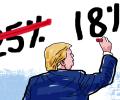
'Trump says India will buy over $500 billion of US goods.' 'At present, India's annual imports of goods and energy from the US are under $50 billion.' 'Reaching $500 billion would likely require more than 20 years, suggesting the figure refers to a long-term aspiration rather than a near-term commitment.'

A 500 per cent tariff would effectively shut out India's goods and services exports to the US.

'Policy consistency combined with timely and calibrated reforms are expected to ensure that India not only maintains macroeconomic stability, but also emerges as a globally competitive and inclusive economy.'

Indian exporters are unlikely to receive direct tariff refunds from the US's $166 billion payout, but the rollback of reciprocal duties is enhancing their pricing power and improving order prospects, particularly in textiles, apparel, and engineering goods.
Indian benchmark indices Sensex and Nifty closed lower, snapping a two-day rally, as a spike in crude oil prices, triggered by reports of fresh US military operations in southern Iran, dampened investor sentiment and reignited fears of renewed energy supply disruptions.

India and France have elevated their relationship to a 'special global strategic partnership,' with increased cooperation in defense, trade, and technology. The leaders also inaugurated a helicopter assembly line in Karnataka.

The European Union (EU) has suspended export benefits to sectors such as textiles and plastics under a preferential scheme for India and two other countries from January 1, a move that will impact the country's shipment to the 27-nation bloc. The development is important as the two sides are likely to announce the closure of negotiations for a free tarde agreement (FTA) on January 27.

Indian stock markets concluded Tuesday's trading session lower, reversing intraday gains due to late-session selling in blue-chip stocks like HDFC Bank and Reliance Industries. The decline was primarily driven by the Indian rupee hitting a new record low against the US dollar and elevated global crude oil prices, compounded by geopolitical uncertainties.

Trading pattern in the stock market this week will largely depend on the ongoing Q3 earnings announcement from corporates, global trends, and foreign fund movement, analysts said. Moreover, geopolitical developments and any update on trade negotiations would also be keenly tracked by investors, experts noted.

Notwithstanding the economic complementarities and the host of agreements for deepening economic relation on a host of areas, both sides share common viewpoints on the foreign policy domain and seek common grounds to serve as a counterweight to China, notes Dr Rajaram Panda.

The rupee recovered to 95.18 against the US dollar after hitting an all-time intra-day low of 95.44. The recovery was supported by possible RBI intervention amid renewed Gulf tensions and rising crude oil prices.

The escalation in the diplomatic row between India and Canada will not have an impact on the bilateral trade and investment ties between the two countries, government sources said on Tuesday. They also said that the bilateral trade value is not significant and Canadian funds can route their investments through Singapore, the UAE and the US. "India is a preferred investment destination," they said.
